At the TUM School of Management, we face the opportunities and challenges of a rapidly changing world and conduct research and teaching with impact on grand societal challenges and sustainable development.
As reflected in our mission, we put emphasis on raising the level of awareness regarding responsible management, ethics and sustainability among our students and faculty.
This page highlights the specific contribution of the TUM School of Management to sustainability in research, teaching, and academic community engagement. It complements university-wide sustainability initiatives by showcasing how expertise in management, entrepreneurship, and innovation contributes to sustainable transformations.
Research that contributes to developing solutions to grand societal challenges is a core element of our mission and vision. To advance this mission, we increasingly engage in interdisciplinary research projects across departments within the School and in collaboration with other TUM schools, addressing the 17 Sustainable Development Goals (SDGs).
We educate our students to meet the challenges arising from digital transformation while fostering awareness of sustainable development. At the same time, we leverage the opportunities offered by digitalization to continuously enhance our research, teaching and learning approaches.
With the adoption of the 2030 Agenda for Sustainable Development on September 25, 2015, at the UN summit in New York, UN member nations decided on a pact on the world’s future. The 17 UN sustainable development goals in the agenda link the principle of sustainability with economic, ecological, and social development. The goals address all countries in the international community and are leading objective for our academic institution.


A global movement transforming business and management education through research and leadership.
Founded in 2007, the Principles for Responsible Management Education (PRME) is a platform which brings educational sustainability to schools around the world. The United Nations-supported initiative leads the vision to create a global movement and drive thought leadership on responsible management education to advance sustainable development. To accomplish this, PRME has engaged over 800 business and management schools worldwide – TUM School of Management being one of them.

Univ.-Prof. Dr. Alwine Mohnen

Education plays a central role in addressing the contemporary problems we face at a societal, economic, and environmental level.
Our close relationship with TUM’s technical and engineering subjects provides natural and fruitful connections, which are reflected in most of our programs. This is demonstrated at the TUM Campus Straubing for Biotechnology and Sustainability, where the Bachelor and the Master in Sustainable Management & Technology are established programs of the School.
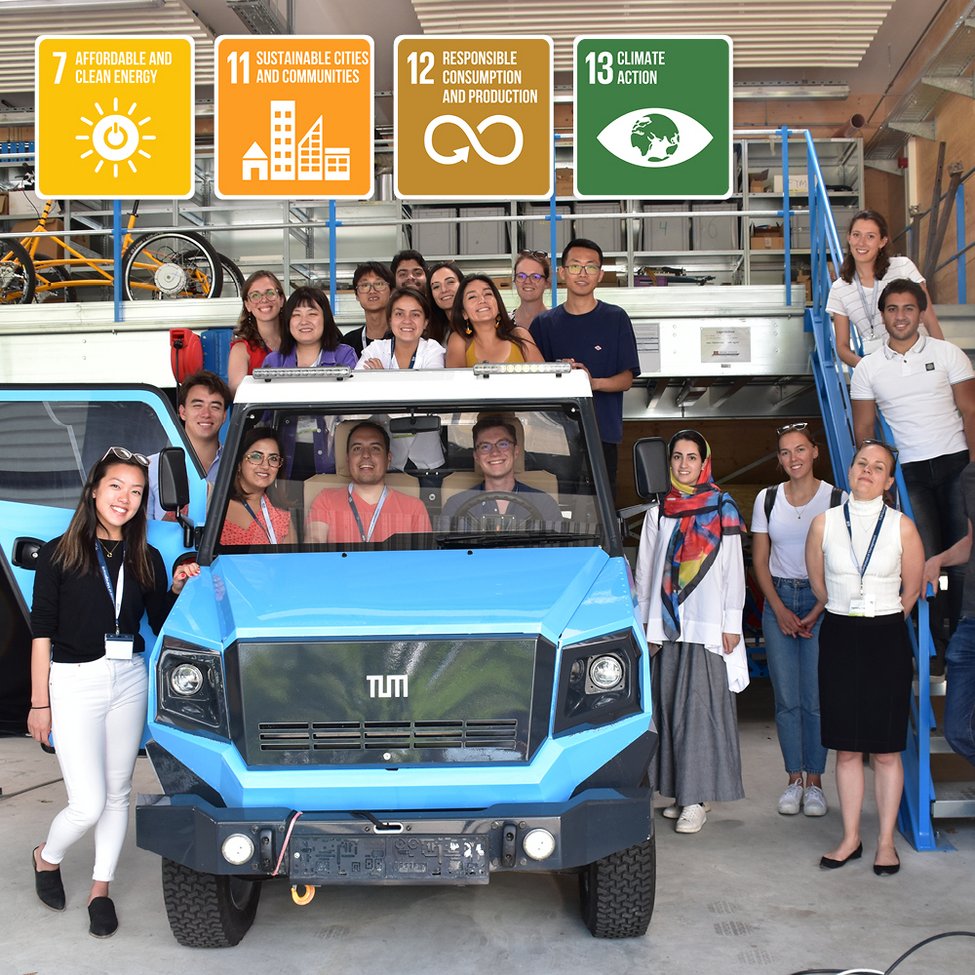
This module examines how businesses—especially family firms—can contribute to a more sustainable and socially responsible economy. It focuses on how the unique values, culture, and non‑financial goals of family ownership shape corporate social responsibility (CSR), sustainability practices, and social entrepreneurship. Through discussions, analysis, and interviews with regional family firms, students gain the ability to critically evaluate CSR initiatives, identify incentives and barriers, and assess how family businesses can leverage sustainability as both a responsibility and an opportunity.
Prof. Melanie Richards
Chair for Family Business Culture and Ownership
Prof. Dr. Frank-Martin Belz
Esther Salvi
Chair of Corporate Sustainability

The field of "business ethics" deals with the norms by which conditions and decisions can be justified and put into practice. This module gives students a profound knowledge of normative ethical theories. It makes them aware of the norms in business-related decisions that go beyond a purely economic rationale. Discussions about stakeholders – as opposed to shareholders – are facilitated. The concept of corporate social responsibility is also introduced, stressing organizations' engagement in (and reporting on) ethically-oriented practices. In addition to learning about theory, students discuss two case studies, where they apply their theoretical knowledge to current problems (for example, ethics in the digital age, ethical considerations regarding bio-hacking).
Prof. Magnus Fröhling
TUM Campus Straubing for Biotechnology and Sustainability
Chair of Circular Economy and Sustainability Assessment
This advanced seminar provides a comprehensive introduction to sustainability management in corporations, exploring key topics such as climate target setting aligned with the Paris Agreement, circular economy strategies, sustainability reporting and performance measurement, incentive systems, employee well-being, and behavioral approaches to sustainable action. Through hands-on research projects, participants apply qualitative or quantitative methods to investigate real-world sustainability challenges, developing both academic research skills and practical expertise relevant to sustainable business management.
Prof. Dr. Alwine Mohnen
Chair of Corporate Management

The Sustainable Transitions Exchange Program (STEP) is a joint initiative between the TUM School of Management (Center for Energy Markets) and the University of Texas at Austin (UT Austin). It allows exchange students to take courses on climatology, engineering, resources economics, and more, while working on their Master Thesis with UT researchers. The partnership with the prestigious UT supports students with research experience and networking in sustainability and energy-related fields.

At TUM School of Management, we conduct research with impact. Sustainability and sustainable development are central aspects and lie at the core of many research centers, scientific publications, and research projects. All our doctoral candidates and researchers have to follow our code of conduct as well as good scientific practices and are invited to include sustainability to various extents in their research. Moreover, scholarships and fellowships offered by the TUM School of Management promote internationalization, gender equality, and diversity as well as entrepreneurial and social initiatives. The School offers also a grant to ensure flexibility and better life balance for doctoral students with families.

The TUM Campus Straubing for Biotechnology and Sustainability is a research-focused hub of the Technical University of Munich dedicated to renewable resources, biotechnology, renewable energy, and the bioeconomy. As home to the TUM School of Management’s Bachelor’s and Master’s programs in Sustainable Management & Technology, the campus uniquely connects sustainability, technology, and management. Students benefit from an interdisciplinary environment that brings together diverse academic disciplines to develop innovative solutions for sustainable development. Closely linked to industry and research partners, Campus Straubing drives the transfer of sustainable technologies and business solutions into practice.

"At Campus Straubing, our work centers on renewable resources, from cultivation and material use to energy recovery and economic implementation. Together, professors, researchers, and students develop sustainable technologies and solutions."

"As an international hub for sustainability and biotechnology, Campus Straubing brings together students from diverse disciplines, creating a unique learning environment where management, technology, and sustainability intersect."
The TUM Sustainability Office serves as the central coordination unit for sustainability at the Technical University of Munich. It oversees the implementation of the TUM Sustainable Futures Strategy and drives the university’s transformation towards a more sustainable future.
Working closely with researchers, student initiatives, university administration, and external partners, the Sustainability Office connects and supports activities across research, teaching, campus operations, and governance. Its responsibilities include advancing the university’s sustainability strategy, monitoring progress and reporting, and coordinating initiatives in areas such as mobility, campus development, climate action, and resource management.
In collaboration with the TUM Green Offices, the Sustainability Office also implements campus-based projects and provides guidance and support to members of the TUM community, helping to translate strategic goals into tangible action.
The TUMFIS Research Information System serves as TUM’s central research portal and provides access to the university’s research activities, projects, publications, researcher profiles, and international collaborations. It offers a comprehensive overview of TUM’s contributions to addressing global sustainability challenges.
The TUM Sustainability Day is an annual event that highlights sustainability as a key technological and societal transformation challenge. Bringing together researchers, students, staff, industry partners, and international stakeholders, it showcases innovative solutions, promotes interdisciplinary exchange, and makes sustainability visible and tangible across the university community.
The TUM ENERGISE Center is an African-German academic partnership coordinated by TUM. Dedicated to advancing a just energy transition in South Africa and beyond, the Center brings together expertise from engineering, policy, business, and sustainability to develop practical solutions in renewable energy, energy governance, and sustainable entrepreneurship. Through joint research, academic exchange, and innovation activities, ENERGISE strengthens collaboration between German and South African institutions and supports the development of resilient and inclusive energy systems.
The TUM SEED Center is a global network that connects partner universities across Africa, Asia, and Latin America. Aligned with the United Nations Sustainable Development Goal 7 (Affordable and Clean Energy), the Center advances sustainable energy access through interdisciplinary research, education, and hands-on Living Labs. By fostering international partnerships and entrepreneurial thinking, the SEED Center helps empower communities, strengthen local capacities, and promote sustainable development throughout the Global South.

“A sustainable energy transition requires more than technology alone. It depends on strong partnerships, entrepreneurial solutions, and the empowerment of local communities. Through initiatives such as ENERGISE and the TUM SEED Center, we connect knowledge, innovation, and people across continents to create lasting impact for a more sustainable and inclusive future.”
Professor Dr. Frank-Martin Belz,
Chair of Corporate Sustainability, TUM